> For the complete documentation index, see [llms.txt](https://wiki.polymaker.com/llms.txt). Markdown versions of documentation pages are available by appending `.md` to page URLs; this page is available as [Markdown](https://wiki.polymaker.com/polymaker-wiki/polymaker-wiki-zh/da-yin-ji-qiao/material-science/strength-testing.md).
# 强度测试
在结束本节之前,了解定义聚合物的不同机械和热性能也很有用。这3项测试可以根据您对打印件的要求,确定材料的“强度”。
我们首先回顾3项主要的机械测试:
### **拉伸测试**

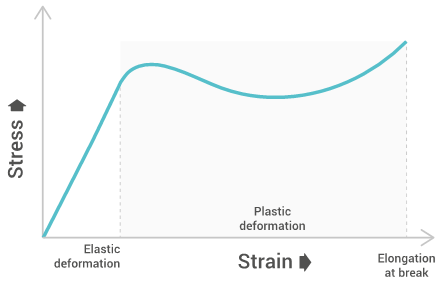
拉伸测试是指对聚合物试样施加拉力直至其断裂。该测试可用于确定试样的拉伸强度、杨氏模量和断裂伸长率。
### **夏比冲击测试**
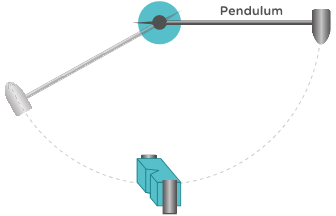
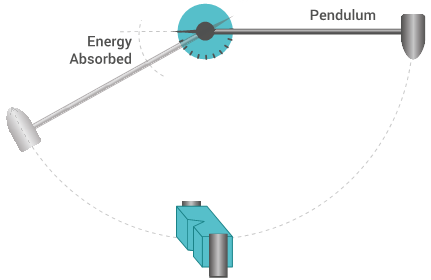
夏比冲击测试是测量使试样断裂所需的冲击能量的过程。该测试通过固定适当的聚合物试样,并释放一个具有设定质量和高度的摆锤与试样碰撞来完成。
### **三点弯曲测试**
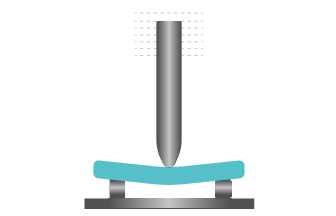
三点弯曲测试是测量试样在逐渐加载下抵抗变形的能力。测试样品除了承受剪切应力外,还在其平面内承受显著的拉伸和压缩应力。该测试可用于确定弯曲强度和弯曲模量。
这些测试中的每一项都将提供定义材料性能的重要数据:
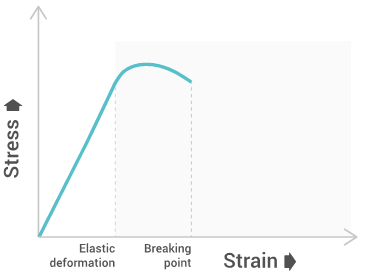
拉伸强度将给出类似于下图的曲线:
### **拉伸强度**
拉伸强度表征将试样拉伸至屈服或断裂点所需的最大应力。屈服拉伸强度测量试样在应力下屈服(称为颈缩)时的应力,断裂拉伸强度测量试样断裂时的应力,而极限拉伸强度是两者之间的最大值。这使我们能够了解材料强度的极限及其在受力时的行为。
### **断裂伸长率**
断裂伸长率测量断裂前初始长度与增加长度之间的变形比。这使我们能够看到材料在断裂前可以承受的拉伸量。
### **杨氏模量**
杨氏模量测量聚合物在单轴应力下抵抗变形的能力。杨氏模量可用于估算由该材料制成的结构的刚度。
弯曲强度将给出类似于下图的曲线:
### **弯曲模量**
弯曲模量是一种局部物理特性,计算为弯曲变形中应力与应变之比。弯曲模量与杨氏模量相似,因为它测试聚合物抵抗变形的能力。
### **弯曲强度**
弯曲强度表示材料在屈服点或断裂点所承受的最高应力。
### **夏比冲击强度**
夏比冲击强度测试使试样断裂所需的冲击力或能量(kJ/m2)。
现在我们回顾热性能:
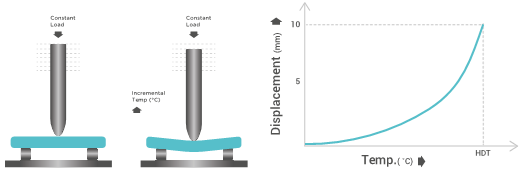
### **热变形温度**
热变形温度是测量聚合物发生一定量变形时的温度。该测试在特定载荷下进行,同时以2°C/min的速度稳定升高温度,并在试样接触传感器的位移达到10mm时测量温度。
### **维卡软化温度**
维卡软化温度虽然与HDT具有可比性,但其不同之处在于提供了一种测试方法,模拟了温度使材料物理性能软化到足以让外部物体在设定压力下穿透试样外表面1毫米的点。

### **熔融指数**
熔融指数表征聚合物在设定压力和温度下的流动行为。这是通过挤出聚合物并测量在设定时间段内挤出物的总重量来实现的。挤出的材料越多,重量增加,因此粘度越低。
---
# Agent Instructions
This documentation is published with GitBook. GitBook is the documentation platform designed so that both humans and AI agents can read, navigate, and reason over technical content effectively. Learn more at gitbook.com.
## Querying This Documentation
If you need additional information that is not directly available in this page, you can query the documentation dynamically by asking a question.
Perform an HTTP GET request on the current page URL with the `ask` query parameter, and the optional `goal` query parameter:
```
GET https://wiki.polymaker.com/polymaker-wiki/polymaker-wiki-zh/da-yin-ji-qiao/material-science/strength-testing.md?ask=&goal=
```
`ask` is the immediate question: it should be specific, self-contained, and written in natural language.
`goal` is optional and describes the broader end goal you are ultimately trying to accomplish on behalf of the user. GitBook uses it to tailor the answer towards what is most useful for that goal.
The response will contain a direct answer to the question and relevant excerpts and sources from the documentation.
Use this mechanism when the answer is not explicitly present in the current page, you need clarification or additional context, or you want to retrieve related documentation sections.